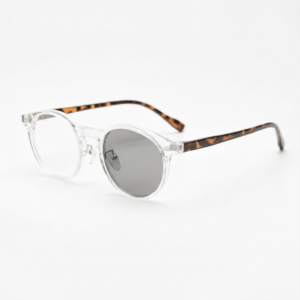
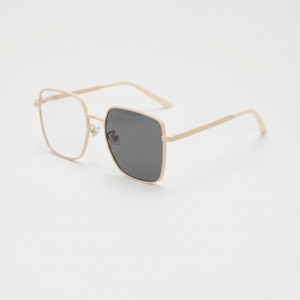
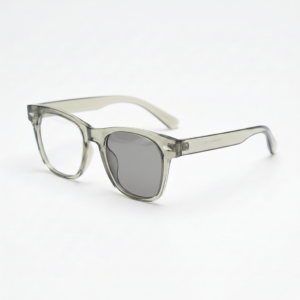
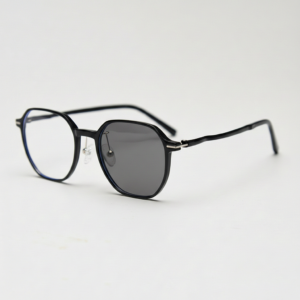
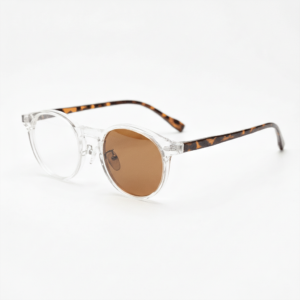
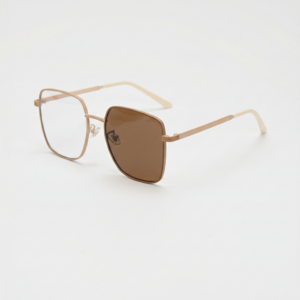
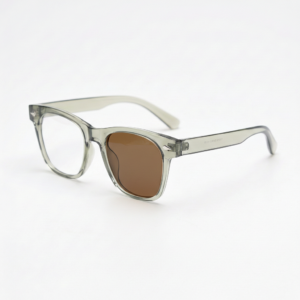
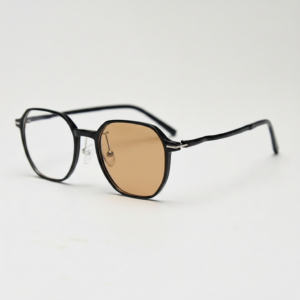
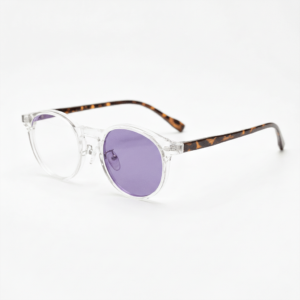
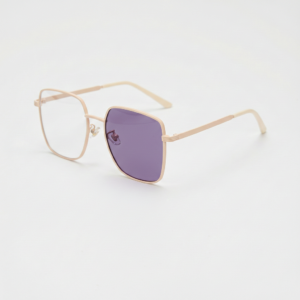
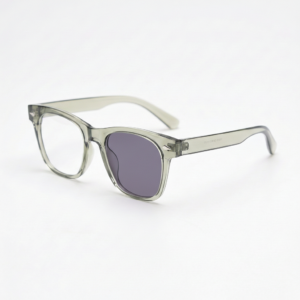
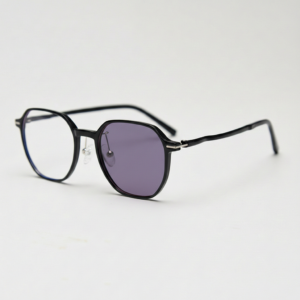
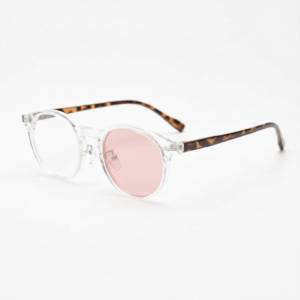
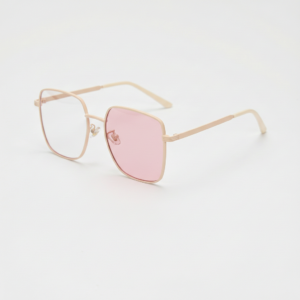
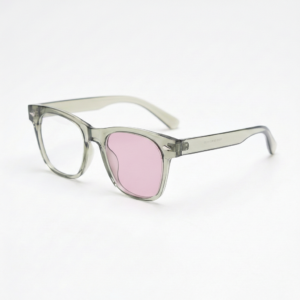
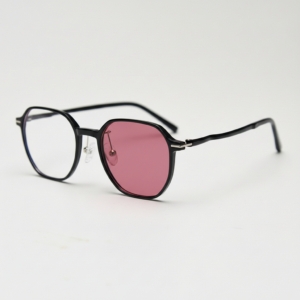
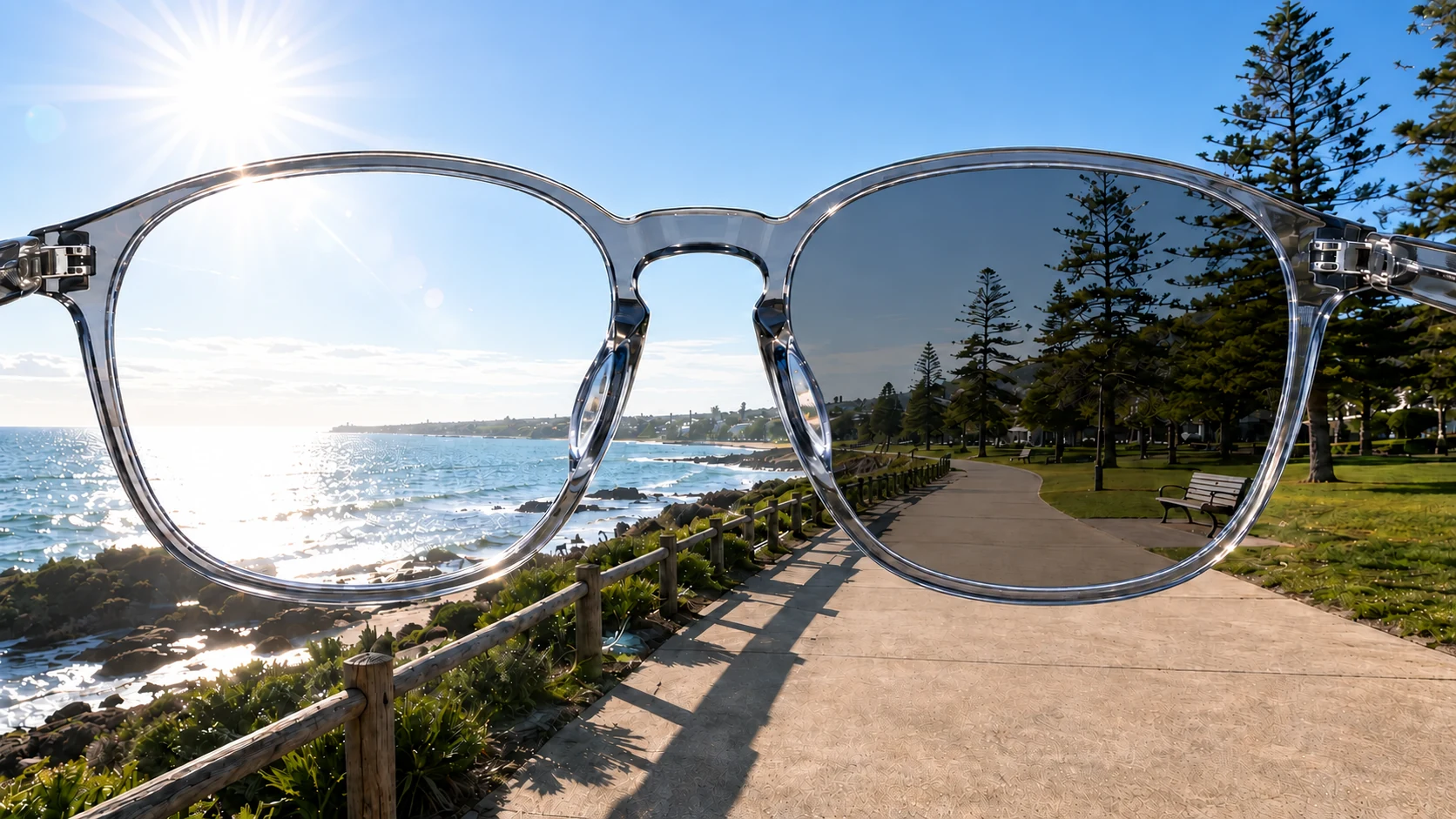
An interactive visual preview designed to show how photochromic lenses respond as lighting conditions change.
What it shows
Left lens: Demonstrates a clear indoor view (baseline).
Right lens: Demonstrates the lens darkening smoothly in outdoor daylight and UV exposure.
How to use it
Drag or tap the Activation level slider to preview tint depth from clear (0%) to deep outdoor activation (100%).
Switch between Lens colours and Outdoor scenes to compare visual comfort across different environments.
Please note:
This preview is illustrative. In everyday wear, actual lens appearance and reaction speed vary with UV intensity, ambient temperature, and lens material. Standard photochromic lenses do not fully darken inside vehicles with UV-filtering windscreens.
Adjust the UV exposure to explore how the tint changes, then discover where photochromic glasses fit into everyday life.
UV shown schematicallyUV-filtering windscreen
Try the UV response explorer
Drag the slider to change the UV exposure.
NoneLowModerateHigh
More UV exposure can produce a deeper tint. Actual performance depends on the lens and conditions.
Illustrative demo, not a real-time performance test. Actual tint and reaction speed vary with UV exposure, temperature and lens material.
Little or no UVTowards a clearer stateMore UV exposureThe tint can deepenAs UV exposure fallsThe tint gradually fades
Illustrative lens states. UV shown schematically; actual tint and reaction speed vary with UV exposure, temperature and lens material.
Photochromic lenses contain light-sensitive molecules that change structure when exposed to UV light. This makes the lenses absorb more visible light and darken. When UV exposure falls, the process reverses and the tint gradually fades. Cloud cover, temperature and UV-filtering windscreens can all affect what you see.
From indoors to the street
Move between cafés, shops and open-air streets with lenses that adapt as UV exposure changes. They can reduce the need to swap glasses during everyday stops, while the tint takes time to adjust.
For walks and everyday outdoor time
On a walk, in the park or during a lunch break outdoors, the tint can deepen as UV exposure increases. Photochromic lenses offer a convenient option for everyday outdoor time; specialist activities may need different eyewear.
Changing skies, changing tint
Cloudy does not mean UV-free. Photochromic lenses may still activate on overcast days, while the depth of tint varies with UV exposure and temperature. Their response will not always match how bright the sky looks.
What to know before you choose
In the car: standard UV-activated lenses may not darken fully behind UV-filtering windscreens.
Temperature matters: tint depth and fade-back speed can change with the conditions.
Photochromic does not mean polarised: changing tint is different from filtering reflected glare.
Most modern windscreens filter significant UV, so standard photochromic lenses may not reach their outdoor tint inside a vehicle.
How quickly do they change?
Reaction speed varies with UV intensity, temperature, lens material and environment. The change is gradual rather than an instant switch.
Can I choose Rx or non-Rx lenses?
Yes. Select a product and use the Select lenses button to review the available lens options before checkout.
Are photochromic lenses the same as sunglasses?
They are clear indoors and adapt outdoors. They are not a replacement for every specialist sunglass use, and their activation depends on the surrounding UV.
Cookie preferencesWe use necessary cookies to keep this site running. Optional cookies help us understand site usage and improve the site. See our Cookie Policy and Privacy Policy.

 Non-Rx
 Single Vision
 Reading
 Varifocal
 CLEAR VIEW
PHOTOCHROMIC VIEW